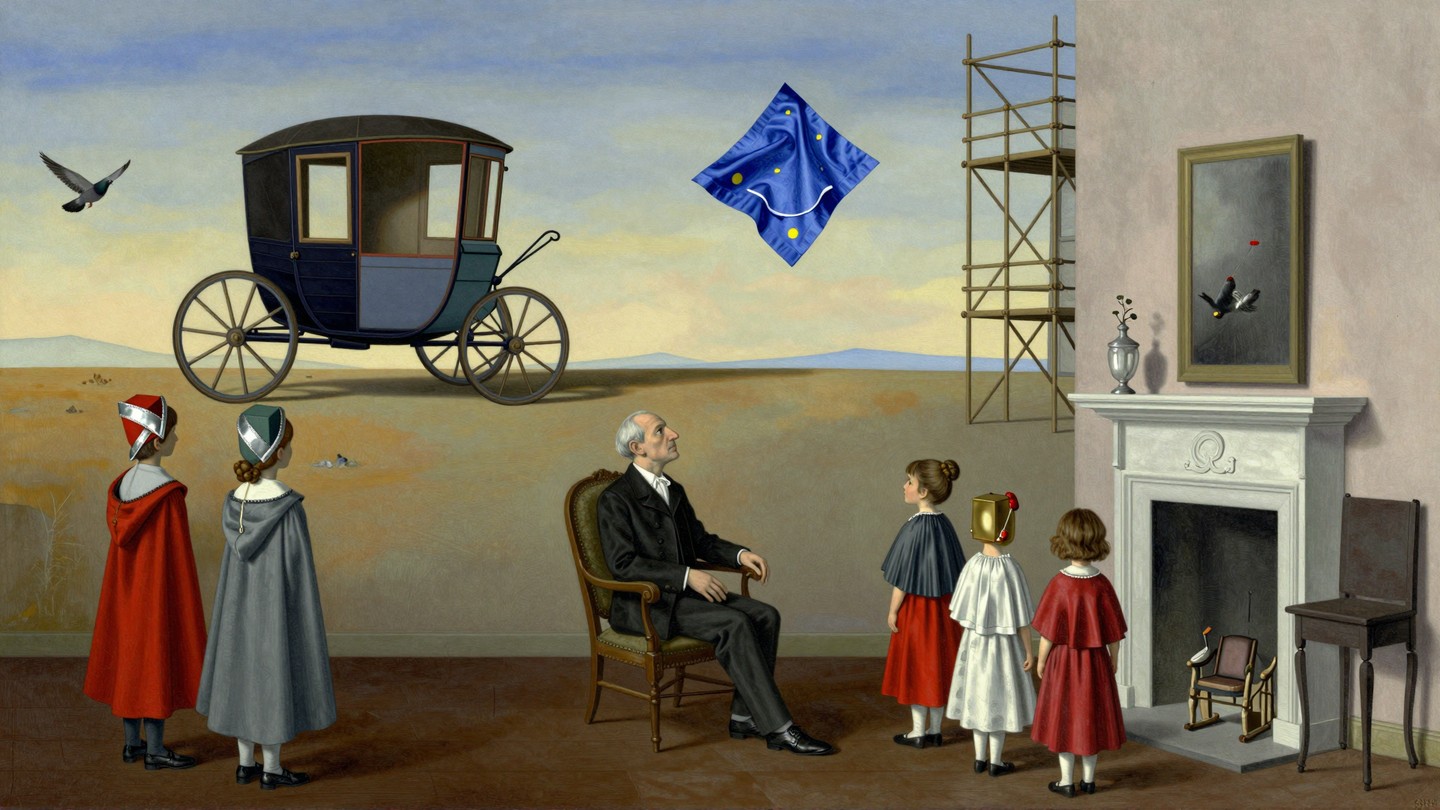
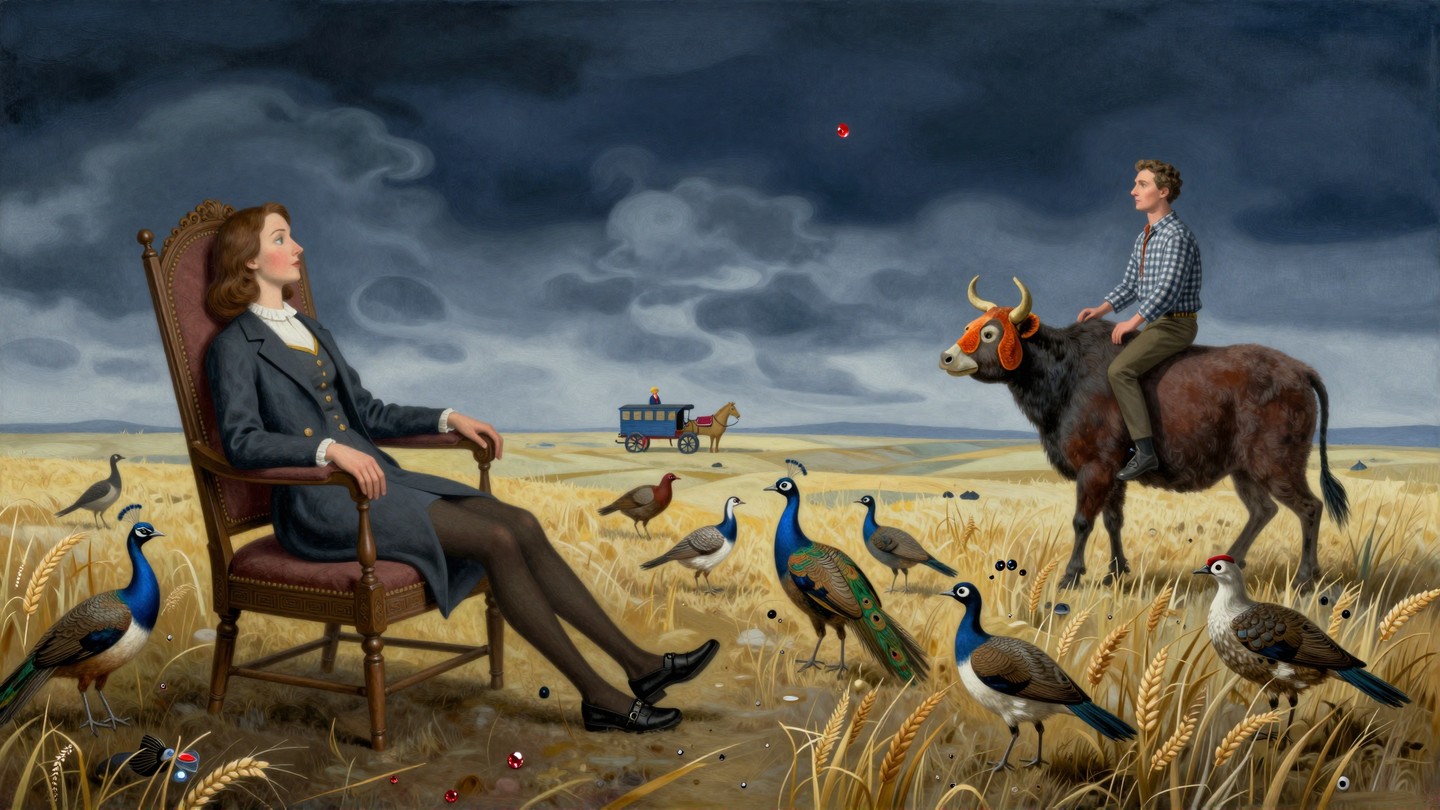
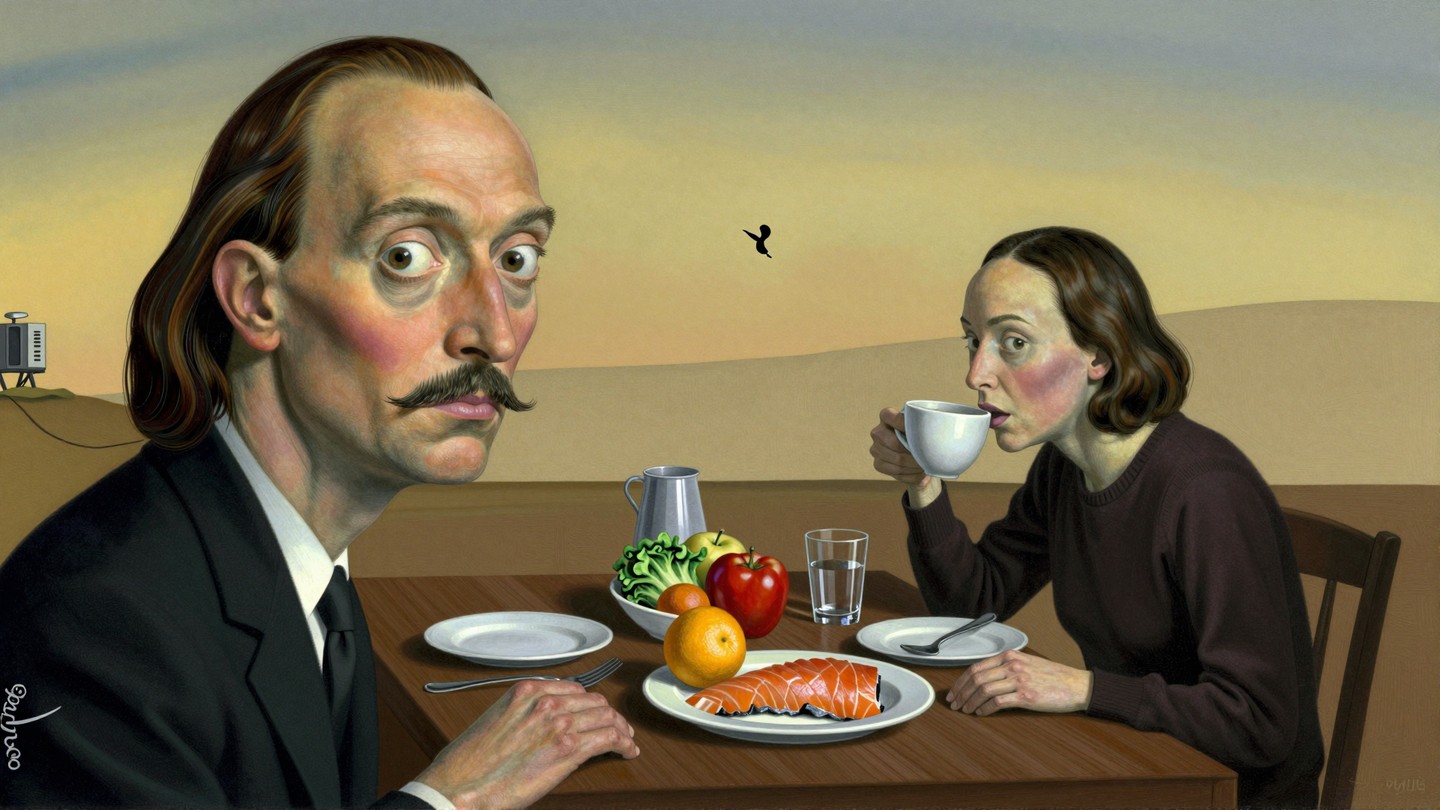
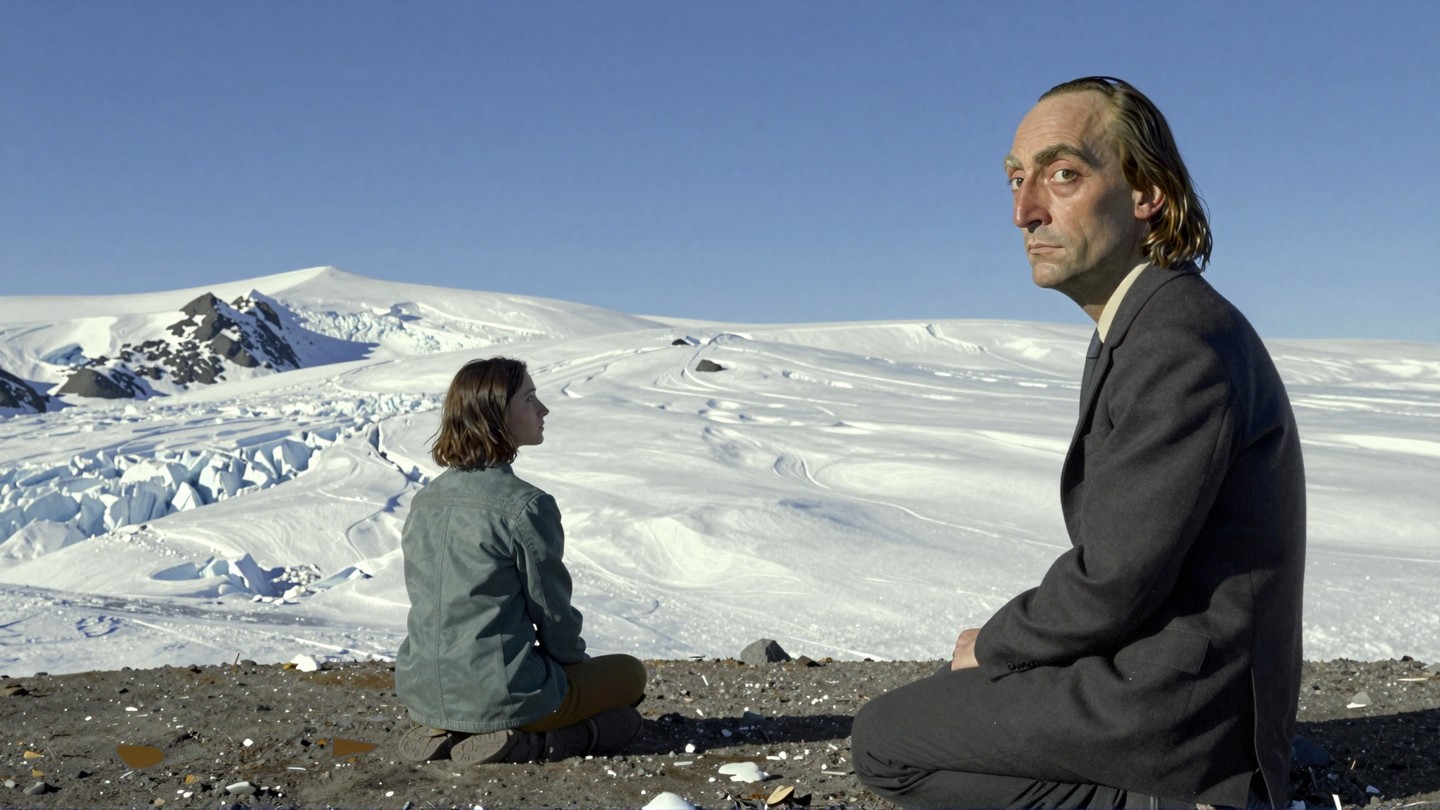
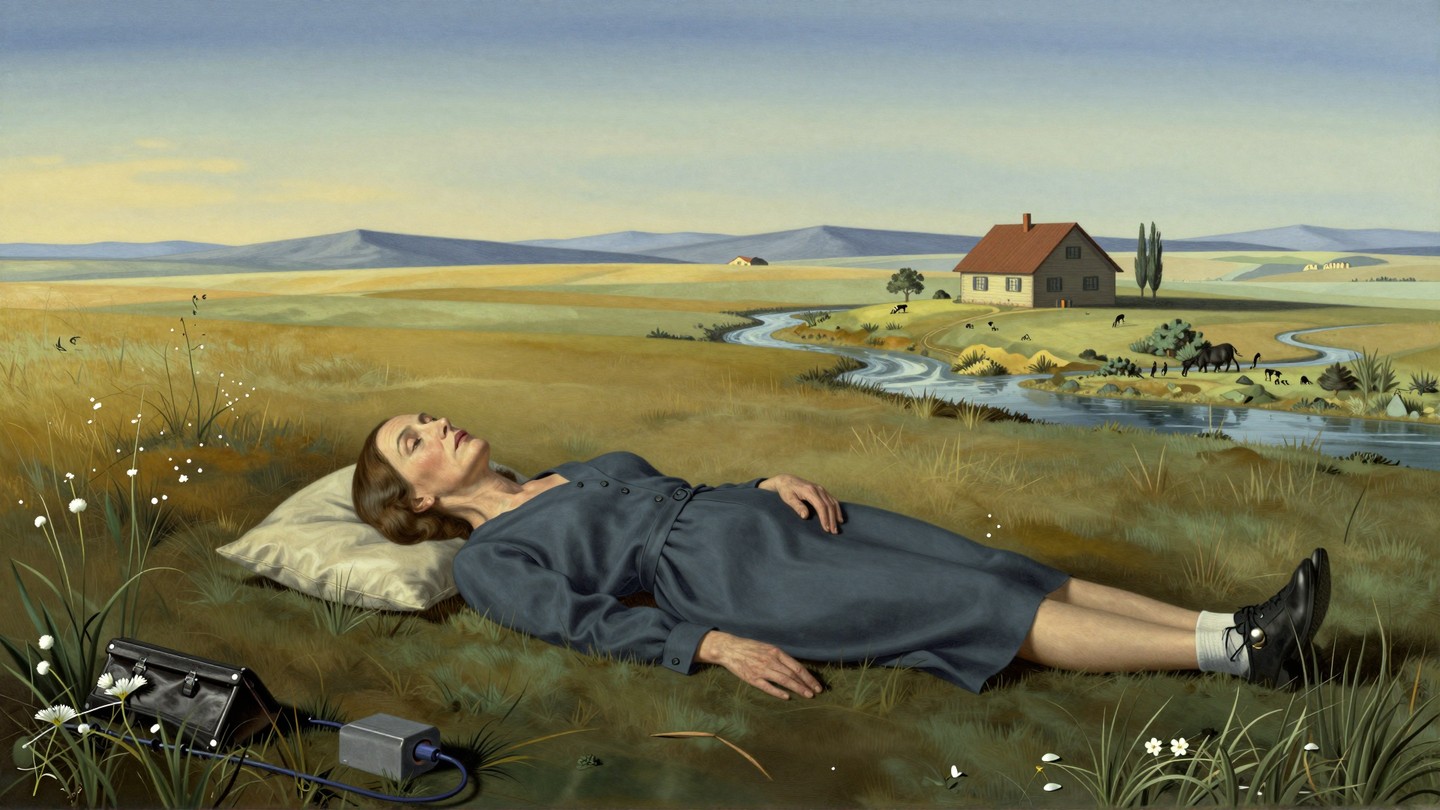
For this week's artifact I was really intrigued by the hallucinative scenarios that the interviewees and patients had described in the chapters from Hallucinations1. So I used these passages of the descriptions of patients as the prompt for a generative image model in ComfyUI called Z-Image Turbo. Before the descriptions of each passage, I also added a global prompt:
Generate a hallucinative artwork in the style of a surrealist Dali drawing:
For the workflow I just used the Z-Image Turbo text-to-image template in ComfyUI and kept most of the defaults. These are the settings I ran every image with, and the seed for each one is at the bottom of its prompt:
Parameter
Value
Workflow
ComfyUI, Text to Image (Z-Image-Turbo)
Model
z_image_turbo_bf16.safetensors
Text encoder
qwen_3_4b.safetensors
VAE
ae.safetensors
Size
1920 × 1080
Sampler
res_multistep, simple scheduler
Steps
8
CFG
1.0
Shift
3.0
Below are the images generated from each of the individual hallucination accounts along with the texts that were used in the generation:
Ch. 1 · Silent Multitudes: Charles Bonnet Syndrome
Fig. 1 AI-generated image of Charles Lullin's visions, 1758.Fig. 2 AI-generated image of Virginia Hamilton Adair's hallucinations.
Ch. 3 · A Few Nanograms of Wine: Hallucinatory Smells
Fig. 3 AI-generated image of Mary B.'s distorted smells and tastes.
Ch. 4 · Hearing Things
Fig. 4 AI-generated image of Joe Simpson's voice in the crevasse.
Ch. 5 · The Illusions of Parkinsonism
Fig. 5 AI-generated image of Gertie C.'s sunlit meadow.
Abstract concepts (time, emotion, power, ideas) are not directly tangible, so human cognition maps them onto familiar physical, spatial and sensorimotor experience.
Because the metaphorical concept is systematic, the language we use to talk about that aspect of the concept is systematic too.
It is a mistake to separate the natural from the artificial as if there were two environments; artifacts have to be manufactured from natural substances.
Perception is economical.
Note that it involves social perception and raises questions of epistemology. The concealing of oneself from other observers and the hiding of a detached object from other observers have different kinds of motivation.
One of the laws of the ambient optic array (Chapter 5) is that at any fixed point of observation some parts of the environment are revealed and the remaining parts are concealed.
An observer can perceive not only that other observers are unhidden or hidden from him but also that he is hidden or unhidden from other observers.
To quote from the Principles of Gestalt Psychology (Koffka, 1935), "Each thing says what it is. ... a fruit says 'Eat me'; water says 'Drink me'; thunder says 'Fear me'; and woman says 'Love me' "
The valence of an object was bestowed upon it in experience, and bestowed by a need of the observer.
An affordance is not bestowed upon an object by a need of an observer and his act of perceiving it. The object offers what it does because it is what it is.
The environment constrains what the animal can do, and the concept of a niche in ecology reflects this fact. Within limits, the human animal can alter the affordances of the environment but is still the creature of his or her situation.
Affordances are properties taken with reference to the observer. They are neither physical nor phenomenal.
The eye stops sending enough visual data to the brain due to vision loss.
The brain tries to fill the empty space by making up images or recalling old memories.
Hallucinations make use of the same visual areas and pathways as perception itself.
Brain-imaging research by Dominic ffytche shows that CBS hallucinations activate the same specialized regions of the visual cortex (such as the fusiform face area or the visual word form area) that fire during actual visual perception.
People with CBS remain sane and lucid.
Ch. 3, smell
Losing the sense of smell (anosmia, often through head trauma or sinus infection) can prompt the brain to generate "phantom" smells.
The brain's olfactory pathways can combine stimulation across hundreds of receptor types to synthesize novel or intrusive phantom odors.
Ch. 4, hearing
The societal stigma that hearing voices automatically implies schizophrenia.
Musical hallucinations: intrusive, highly detailed music (old hymns, classical pieces, nursery rhymes) repeating like a broken record or an "intracranial jukebox".
"Complex visual hallucinations entail the putting together of such elements, an act of assemblage, and these assemblages are continually permuted, disassembled, and reassembled."
Ch. 5, Parkinsonism
Hallucinations in Parkinson's can be triggered by dopamine-enhancing medications (like L-dopa) or by underlying degenerative changes in brainstem cholinergic systems and Lewy body pathology.
References
Sacks, O. (2012) Hallucinations. New York: Alfred A. Knopf. ↩↩2
Lakoff, G. and Johnson, M. (1980) Metaphors we live by. Chicago: University of Chicago Press. ↩
Gibson, J.J. (1979) 'The theory of affordances', in The ecological approach to visual perception. Boston: Houghton Mifflin, pp. 127–143. ↩
I am a computational designer and creative technologist. I work across spatial AI, robotic fabrication and programmable material systems. Most of what matters about a design is the part we can only describe: how it is perceived, how it feels to stand in. My research makes that part structured, measured and operable. I build the tools as well as the work they make.